

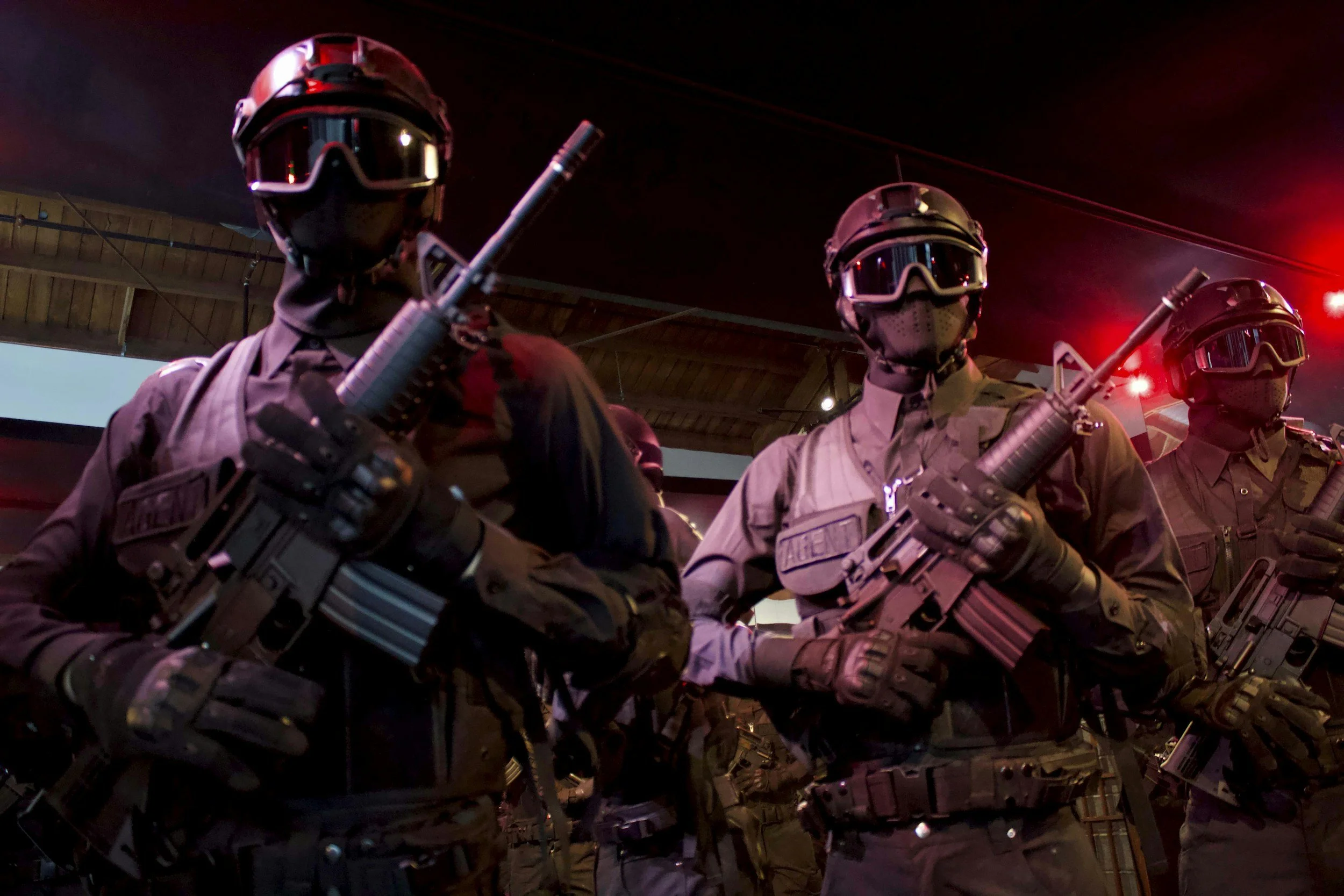
Billion Dollar Cartel Violence
The modern macroeconomic landscape is increasingly defined by the complex intersection of institutional stability, sovereign capacity, and global capital flows. The 2026 FIFA World Cup, co-hosted by the United States, Canada, and Mexico, was engineered to be a historic catalyst for economic growth, regional integration, and international tourism.1 For Mexico, preparing to host the tournament for an unprecedented third time, the event represented a critical opportunity to project a narrative of modernization, cultural richness, and economic resilience on the global stage.2 The foundational viability of such mega-events, however, relies entirely on the host nation's ability to project and maintain a stable institutional framework that guarantees the absolute safety of incoming human capital and foreign direct investment.
1. Introduction: The Intersection of Sovereign Capacity and Mega-Events
The modern macroeconomic landscape is increasingly defined by the complex intersection of institutional stability, sovereign capacity, and global capital flows. The 2026 FIFA World Cup, co-hosted by the United States, Canada, and Mexico, was engineered to be a historic catalyst for economic growth, regional integration, and international tourism. For Mexico, preparing to host the tournament for an unprecedented third time, the event represented a critical opportunity to project a narrative of modernization, cultural richness, and economic resilience on the global stage. The foundational viability of such mega-events, however, relies entirely on the host nation's ability to project and maintain a stable institutional framework that guarantees the absolute safety of incoming human capital and foreign direct investment.
The events of February 22 and 23, 2026, have fundamentally altered the geopolitical and macroeconomic risk calculus for the Mexican leg of the tournament. The targeted killing of Nemesio Rubén Oseguera Cervantes, known universally as "El Mencho," the founder and leader of the Jalisco New Generation Cartel (CJNG), by Mexican military forces has triggered a cascading and unprecedented security crisis across the republic. The immediate retaliatory violence—manifesting as highly coordinated highway blockades, urban arson, and armed confrontations resulting in dozens of casualties—has paralyzed key World Cup host cities, most notably Guadalajara, the capital of Jalisco.
To accurately assess the structural damage this security shock inflicts on prior economic forecasts—specifically the baseline estimates of 5.5 million visitors and a $1.24 billion direct economic impact calculated by Deloitte before the outbreak of violence —traditional macroeconomic models prove highly insufficient. Standard models assume a baseline level of state control and struggle to price the frictional costs of sudden, systemic violence and the breakdown of the underlying social contract. Consequently, this exhaustive research report employs Capacity-Based Monetary Theory (CBMT) to rigorously quantify how the degradation of institutional stability directly dilutes the value of sovereign claims, accelerates capital flight, and critically undermines the agglomeration premiums required for high-yield international tourism. By deconstructing the mechanisms of tourist behavior, financial market reactions, and sector-specific vulnerabilities, this analysis provides a revised, post-crisis outlook for Mexico's World Cup economic dividend.
2. Theoretical Framework: Capacity-Based Monetary Theory (CBMT)
To understand the profound and lasting economic consequences of the CJNG cartel violence on Mexico's World Cup prospects, the analytical framework must shift from neoclassical models of utility and exchange to Capacity-Based Monetary Theory (CBMT). CBMT posits a fundamentally different ontology of value: money is not a static store of wealth backed by mere fiat or historical reserves, but rather a floating-price claim on the future productive capacity, or "Expected Future Impact," of the society that issues it.
2.1 The Augmented Production Function and Mega-Events
In the CBMT framework, the magnitude of a society's impact is mathematically synonymous with its real output ($Y$). This capacity is rigorously defined using the Mankiw, Romer, and Weil (MRW) augmented growth model, which integrates physical capital ($K$), human capital ($H$), aggregate labor ($L$), and labor-augmenting technology or efficiency ($A$) :
$$Y = K^\alpha H^\beta (A L)^{1-\alpha-\beta}$$
Under normal, stable conditions, a global mega-event like the FIFA World Cup serves as a massive, positive exogenous shock to this specific equation. The tournament is designed to attract a temporary but highly concentrated influx of human capital ($H$) in the form of high-net-worth tourists, athletes, and international media. Furthermore, it forces the rapid accumulation of physical capital ($K$) through the construction of stadiums, transportation networks, and hospitality infrastructure, while simultaneously enhancing technological efficiency ($A$) through smart city integrations and advanced security networks. However, CBMT dictates that this theoretical capacity is entirely conditional; it is only valid if the surrounding institutional framework possesses the strength to guarantee the realization of this output.
2.2 The Hobbesian Trap and the Institutional Realization Rate
The most critical variable introduced by CBMT—and the one most relevant to the crisis in Mexico—is the Institutional Realization Rate ($I_r$). Theoretical production capacity remains a mathematical illusion if the fruits of labor, tourism revenues, and capital investments cannot be secured against expropriation, extortion, or systemic violence.
Drawing heavily on the institutional jurisprudence of Douglass North, CBMT formally defines the Realizable Impact of an economy as:
$$Y_{realizable} = I_r \times Y_{theoretical}$$
Where $I_r$ is a strict coefficient between 0 and 1, representing the empirical measure of Institutional Quality, encompassing the rule of law, the state's monopoly on legitimate violence, and the reliable enforcement of contracts.
In CBMT, the state functions as the "Leviathan," existing primarily to impose order and lower the transaction costs of economic exchange. When the Leviathan fails to suppress rival factions or control violence, the state begins to slip toward a "Hobbesian Trap"—a condition characterized by infinite transaction costs where the future is dominated by warfare and profound uncertainty. In a Hobbesian regime, the discount rate on future cash flows approaches infinity because no rational economic agent will exchange capital today for a future promise if that future brings the threat of violence or expropriation. The CJNG's massive retaliatory actions following the death of El Mencho effectively represent a violent, highly visible contestation of the Mexican Leviathan's monopoly, severely depressing Mexico's $I_r$ coefficient on the global stage and instantly devaluing its economic projections.
2.3 The O-Ring Filter and Elite Tourism Agglomeration
CBMT fundamentally redefines the economics of high-value tourism through the integration of signaling theory, specifically Zahavi’s Handicap Principle, and Michael Kremer’s O-Ring Theory of Economic Development. Elite, high-yield tourism relies heavily on "Assortative Mating" and high "Talent Density." High-cost global destinations act as an O-Ring Filter; the substantial premium paid by international tourists is effectively a "subscription fee" to access a high-efficiency, highly secure network where the probability of serendipitous, high-value experiences is maximized, and the risk of physical harm is reduced to zero.
For the 2026 World Cup to successfully generate Deloitte's forecasted $1.24 billion in direct economic impact , the Mexican host cities must flawlessly operate this O-Ring Filter. International tourists must believe, without hesitation, that the premium they pay for flights, luxury accommodations, and secondary market match tickets guarantees an environment free from low-skill errors or, more importantly, systemic security failures. Cartel violence fundamentally shatters the O-Ring Filter. Because the tourism experience is a sequential chain, a single catastrophic point of failure (e.g., an armed confrontation near a stadium, a burning roadblock on an airport highway, or a civilian casualty) destroys the value of the entire experiential chain. When the O-Ring breaks, high-capacity economic agents will rationally route their human capital and financial resources elsewhere.
2.4 Regime-Switching Models and the Hamilton Filter
To accurately model the suddenness and severity of the economic impact stemming from the February 2026 violence, CBMT utilizes the Hamilton Filter for discrete regime shifts. Global financial markets and international tourists do not price risk in a slow, linear fashion; rather, they price the probability of the host economy shifting abruptly from a "Stable/Growth Regime" ($S_t = 1$) to a "Collapse/Hobbesian Regime" ($S_t = 0$).
The Hamilton equation updates these probabilities dynamically based on the arrival of new, high-impact data ($y_t$):
$$P(S_t = j | y_t) = \frac{p(y_t | S_t = j) P(S_t = j | y_{t-1})}{f(y_t | y_{t-1})}$$
The assassination of El Mencho and the subsequent nationwide cartel insurgency act as a massive, undeniable data shock ($y_t$). This shock forces international bond markets, foreign direct investors, tourists, and FIFA executives to rapidly update their regime probabilities. This instantaneous mathematical update directly causes a spike in the risk premium demanded on all Mexican assets, triggers capital flight, and instantly invalidates linear revenue projections for the World Cup.
| CBMT Variable | World Cup Application | Impact of February 2026 CJNG Violence |
|---|---|---|
| Theoretical Impact ($Y$) | Stadiums, infrastructure, hospitality capacity | Physical capital remains, but utility is blocked by security risks. |
| Human Capital ($H$) | Influx of 5.5 million tourists and fans | Severe contraction as high-capacity agents avoid Hobbesian zones. |
| Institutional Realization ($I_r$) | State security, rule of law, safe transit | Plummets as cartels successfully contest the state's monopoly on violence. |
| O-Ring Filter | Premium pricing for safe, seamless experiences | Shattered; single points of failure (narcobloqueos) ruin the sequential tourism chain. |
| Hamilton Filter ($S_t$) | Market perception of systemic stability | Rapid shift from "Stable" to "Hobbesian" regime, spiking risk premiums. |
3. The Pre-Crisis Paradigm: Deloitte's Baseline Economic Calculus
Prior to the structural shock of the February 2026 security crisis, the economic projections for Mexico's participation in the 2026 FIFA World Cup were overwhelmingly optimistic, functioning entirely on the assumption of a stable $I_r$ coefficient. The tournament's historically expanded format—featuring 48 national teams playing a total of 104 matches, with Mexico slated to host 13 matches across Mexico City, Monterrey, and Guadalajara—was designed by the Mexican government and international bodies to be a profound economic catalyst.
3.1 Visitor Volume and Demographic Assumptions
In the years leading up to 2026, leading consultancies including Deloitte and Tourism Economics formulated highly detailed baseline estimates predicting that Mexico would welcome up to 5.5 million visitors throughout the duration of the tournament.
The projected visitor demographic was carefully bifurcated into two primary, high-yield segments. The first segment consisted of the Direct Match Attendees. Estimates indicated that approximately 800,000 to 836,000 fans would be directly associated with the 13 stadium matches. This group was further segmented into roughly 556,000 domestic travelers and 280,000 high-spending international guests. While these numbers appear modest compared to the 1.5 million international arrivals seen in Brazil in 2014 or Russia in 2018, the trinational, spread-out format of the 2026 tournament was designed to hide higher per-capita spending and a wider geographic reach within these lower absolute volumes.
The second, massively larger segment consisted of Fan Fest and Cultural Tourists. The remaining millions of visitors were projected to participate in decentralized, public FIFA Fan Fests and parallel cultural events. These massive public viewing parties were designed to open the World Cup experience to those lacking official match tickets. Planners expected these events to draw an astounding 4.2 million people across Mexico. Mexico City's historic Zócalo was slated to serve as the main national center, expecting around 2.2 million visitors. Monterrey's Fundidora Park was projected to host 1.1 million, while Guadalajara's Plaza Liberación anticipated crowds of up to 900,000 people.
3.2 The $1.24 Billion Direct Economic Impact Breakdown
Deloitte's central economic thesis estimated a massive direct economic impact of roughly $1.243 billion within Mexico's borders. This figure was not merely a gross domestic product addition, but rather a highly targeted, intensely concentrated injection of capital into specific consumer and service sectors.
| Economic Sector | Pre-Crisis Projected Impact Dynamics |
|---|---|
| Tourism & Accommodation | Massive spikes in hotel occupancy rates were anticipated. The host regions, particularly Jalisco, were rushing to add 12,000 new hotel rooms to meet the impending demand. The focus was on extended stays and premium pricing. |
| | Food, Beverage & Retail | Local "street-level" consumption was expected to be the tournament's biggest winner. Specialists anticipated notable sales increases in hospitality and entertainment, where demand could rise by as much as 30% during June and July.
| | Infrastructure & Tech | The event stimulated massive capital expenditure. Over \$2 billion was allocated for urban development and transportation, with \$500 million dedicated to stadium renovations. A \$9 billion MXN investment was directed to modernize Mexico City International Airport (AICM).
| | Labor Market | Forecasts confidently pointed to the creation of 100,000 to 112,000 direct and indirect temporary jobs during the tournament months, driven heavily by the service requirements of the 4.2 million Fan Fest attendees.
|
Beyond the direct \$1.24 billion injection, broader macroeconomic calculations suggested the tournament could deliver a total, multiplier-adjusted economic boost of \$2.73 billion, equivalent to roughly 0.14% of Mexico's Gross Domestic Product. Furthermore, domestic commerce organizations like CONCANACO SERVYTUR projected that through highly coordinated national retail strategies, the broader domestic consumption impact could reach up to \$11 billion (MX\$200 billion).
This sophisticated baseline calculus depended completely on a singular, fragile assumption: that domestic and international tourists would feel entirely safe engaging in uninhibited street-level consumption, moving freely between sprawling public fan zones, and utilizing regional public transit networks. It assumed, in essence, a high-functioning Leviathan.
4. The Catalyst: The February 2026 Security Shock and the Fall of the Leviathan
The theoretical foundations of the pre-crisis economic models were irreversibly shattered on Sunday, February 22, 2026. Acting on intelligence that tracked a confidant of one of his romantic partners, Mexican military and special forces units launched a targeted, high-stakes operation in Tapalpa, a mountainous resort town approximately two hours southwest of the World Cup host city of Guadalajara.
4.1 The Death of El Mencho and the CJNG Retaliation
Nemesio Rubén Oseguera Cervantes, known globally as "El Mencho," was the 59-year-old founder of the Jalisco New Generation Cartel. He was one of the world's most wanted fugitives, carrying a \$15 million U.S. bounty and an additional MXN \$300 million reward from the Mexican government. During the fierce firefight with military personnel, Oseguera was mortally wounded and subsequently died while being airlifted to Mexico City.
The CJNG, boasting an estimated 19,000 heavily armed members and operating across 21 to 28 of Mexico's 32 states, is considered the most powerful and ruthless criminal organization in the country, having been designated a Foreign Terrorist Organization by the United States. Rather than collapsing upon the death of its founder, the cartel immediately initiated a highly coordinated, asymmetric counter-offensive against the Mexican state. This response was a textbook demonstration of a criminal syndicate violently contesting the Leviathan's monopoly on force.
The immediate aftermath resulted in a severe, highly visible degradation of public order across the republic:
Narcobloqueos and Arson: Cartel operatives utilized burning buses and commandeered vehicles to establish blockades at more than 250 points across at least 20 states. This tactic severed critical logistical arteries, effectively taking control of regional highways.
Mass Casualties: The retaliatory violence resulted in significant loss of life. Authorities confirmed the deaths of at least 25 members of the National Guard in six separate attacks in Jalisco alone. Additionally, roughly 30 cartel operatives and several civilian bystanders were killed in the clashes, bringing the immediate death toll to over 70 individuals.
Urban Paralysis: The World Cup host cities were directly and intimately impacted. In Guadalajara, the capital of Jalisco, the government was forced to initiate a "code red" lockdown. Public transportation was completely halted, schools and businesses were closed, and residents were instructed to shelter in place as the city took on the appearance of a war zone.
4.2 Immediate Disruption to the Sports and Tourism Economies
The systemic violence instantly spilled over into the sports and tourism sectors, serving as a bleak, undeniable leading indicator for the upcoming World Cup.
The sporting calendar was immediately decimated. Four high-level professional football matches were postponed due to the inability to guarantee security. This included a top-tier men's Liga MX match between Querétaro and Juárez, and a highly anticipated women's Clásico Nacional match between Chivas and América scheduled at the Estadio Akron in Guadalajara—the exact venue slated to host four World Cup matches. Furthermore, an international friendly between the Mexican national team and Iceland, scheduled to be played at the Corregidora stadium in Querétaro, was abruptly canceled by the Mexican Football Federation.
Simultaneously, the tourism infrastructure suffered total paralysis. Heavily armed cartel members established roadblocks that isolated the Guadalajara International Airport (GDL) and Puerto Vallarta's Licenciado Gustavo Díaz Ordaz International Airport (PVR). This led to mass flight cancellations and diversions by major international carriers, including Air Canada, WestJet, and American Airlines. The chaos was exemplified by the fact that over 1,000 civilians, including young children, were trapped overnight and forced to sleep in buses within the Guadalajara zoo, unable to safely navigate the city's streets.
In response, international governments acted swiftly. The U.S. State Department, Global Affairs Canada, and the UK Foreign Office issued severe emergency travel advisories, urging their citizens to seek immediate shelter, lock their doors, and reconsider all non-essential travel to the affected states. In CBMT terms, the Leviathan had visibly and publicly failed to maintain the O-Ring Filter. The transaction costs of basic movement and commerce had temporarily become infinite in the affected zones.
5. The Hamilton Filter Triggered: Capital Flight and the Repricing of Sovereign Risk
According to Capacity-Based Monetary Theory, when a nation's Institutional Realization Rate ($I_r$) drops precipitously, the fundamental value of the sovereign's currency and debt must mathematically depreciate. Because money and debt are priced claims on future impact, global financial markets rapidly assessed that Mexico's future impact would be heavily constrained by escalating internal conflict, extortion, and the redirection of capital from productive uses to defensive security measures.
5.1 The Hamilton Filter in Action: Sovereign Bond Yields
Financial markets processed the February 22-23 violence precisely as a discrete regime shift, mathematically updating the transition matrix probabilities from a stable macroeconomic growth regime to a high-friction conflict regime.
This immediate repricing of sovereign risk was starkly visible in the Mexican bond markets. On February 20, just prior to the full realization of the cartel retaliation, the yield on Mexico's 10-Year Government Bond spiked to 8.76%. This increase reflects the exact risk premium demanded by global investors to hold Mexican debt in the face of escalating cartel warfare. Higher yields denote that capital is becoming increasingly "expensive" for the Mexican state to service, as the market's discount rate spikes to account for the deep uncertainty surrounding future productive capacity. Following strong foreign inflows into MBonos in January , this reversal threatens to undo months of macroeconomic stabilization efforts by the central bank (Banxico).
5.2 The Threat to Foreign Direct Investment (FDI) and Capital Flight
The cartel violence operates as a massive, direct, and unlegislated tax on economic growth. Research from J.P. Morgan estimates that crime and violence alone cost the Latin American region 3.4% of its GDP annually, with the specific economic cost of insecurity in Mexico reaching a staggering 18.0% of its GDP.
Prior to the crisis, organizations like the Institute of International Finance (IIF) had already warned of the potential for capital flight, citing "domestic institutional fragility" and uncertainty surrounding the upcoming USMCA free trade agreement review. The IIF projected that Mexico's economy might fail to reach even 1% growth in 2026. The violent reality of February 2026 forcefully validated these fears, prompting a rapid reallocation of capital.
The state of Sinaloa serves as a grim, empirical leading indicator for what Jalisco and the broader Mexican macro-economy may face. Amidst a prolonged civil war between rival cartel factions over the past year, Foreign Direct Investment (FDI) in Sinaloa plummeted by an astonishing 87% in the first half of the year, shrinking from $262.8 million down to a mere $34.3 million.
The CJNG's operational model severely exacerbates this FDI flight. The cartel is highly diversified, generating massive illicit revenue not just from traditional drug trafficking, but from the targeted extortion of legitimate global enterprises. The U.S. Treasury Department has repeatedly highlighted the CJNG's extensive involvement in highly organized timeshare fraud networks in tourist hubs like Puerto Vallarta. These networks defraud foreign citizens, particularly elderly Americans, of their life savings, severely deterring international real estate investment and poisoning the tourism well. Furthermore, as traditional narcotics revenues face border pressure, cartels increasingly target foreign-owned mining, logistics, and commercial operations for extortion and mass kidnapping, driving up the risk premiums for international firms to untenable levels.
5.3 Real Estate and the Reversal of Investor Sentiment
The suddenness of the Hamilton regime shift is highlighted by the contrast with investor sentiment just weeks prior. According to CBRE's 1Q26 Mexico Investment Sentiment Survey, commercial real estate investors were highly optimistic, with 83% planning to maintain or increase their investments in 2026. This optimism was driven by nearshoring trends, easing inflation, and the impending infrastructure boom associated with the World Cup.
However, CBMT dictates that real estate valuations are inherently tied to the security of the surrounding institutional framework. With the CJNG proving its immense capability to torch businesses, attack banks, and blockade entire metropolitan areas at will, the underwriting assumptions for these real estate investments are fundamentally broken. Investors are now forced to reassess the viability of deploying capital into regions where the state cannot guarantee the physical integrity of the assets, likely resulting in delayed deployments and canceled projects.
6. The Collapse of the O-Ring Filter: Revising the 5.5 Million Visitor Forecast
The Deloitte baseline model of 5.5 million visitors is no longer mathematically or practically viable. Applying Capacity-Based Monetary Theory, economists must apply a stringent Institutional Realization discount to these figures. The O-Ring Filter—the absolute guarantee of safety required to attract high-net-worth, high-capacity international tourists—has demonstrably failed.
6.1 The Psychology of the Mega-Event Tourist
Applying Zahavi’s Handicap Principle to tourism, the act of traveling internationally to a World Cup is a costly signal of surplus capacity. Tourists are willing to "burn" significant capital on premium flights, hotels, and tickets because they expect a flawless, high-status experience. However, a high-capacity individual will absolutely not burn capital if doing so jeopardizes their physical survival.
The immediate issuance of "shelter in place" and "reconsider travel" advisories by the U.S. State Department and Global Affairs Canada completely alters the booking psychology. The threat is no longer abstract; international media has broadcast footage of burning buses near the Estadio Akron and panicked tourists trapped in airports.
6.2 Deconstructing the 5.5 Million Forecast
The projection of 5.5 million visitors was heavily reliant on fluid domestic movement and international arrivals feeling secure enough to utilize open public spaces. The reality of February 2026 dictates a massive downward revision across all visitor segments.
| Visitor Segment | Pre-Crisis Estimate | Post-Crisis CBMT Revision Rationale |
|---|---|---|
| International Match Attendees | 280,000 | Severe Contraction. Official travel advisories warning against travel to Jalisco will instantly cripple inbound tourism. High-net-worth international fans will forfeit tickets or attempt to transfer them rather than navigate a Hobbesian security environment. Corporate sponsors will cancel executive travel packages to avoid duty-of-care liabilities. |
| | Domestic Match Attendees | 556,000 | Moderate to Severe Contraction. Domestic tourists are acutely aware of the "narcobloqueos" threat. The severe risk of being stranded on highways or caught in sudden cartel crossfire will heavily deter inter-state travel to host cities.
| | Fan Fest & Cultural Participation | 4.2 Million across public squares | Catastrophic Collapse. The Fan Fest model relies entirely on dense, unprotected crowds gathering in public plazas (e.g., Zócalo, Plaza Liberación). Given the CJNG's proven willingness to target civilian infrastructure and the systemic threat of active shooter or explosive incidents, the security perimeter required to protect these soft targets is virtually impossible to maintain. Attendance will plummet due to the legitimate, rational fear of mass-casualty events.
|
Furthermore, damaging rumors have already circulated widely online regarding FIFA potentially moving matches out of Mexico to the US and Canada. While these rumors have been largely debunked by fact-checkers and have not been officially confirmed by FIFA , Spanish sports outlets note that sources familiar with planning acknowledge a "high level of concern over whether conditions on the ground can ensure the safety expected at a global sporting event of this scale". Even if the matches strictly remain in Mexico, the mere specter of cancellation or relocation introduces terminal hesitation into the consumer booking cycle, freezing ticket and hotel sales.
7. Sectoral Degradation: Deconstructing the $1.24 Billion Impact
Deloitte's estimated $1.24 billion direct economic impact was predicated on "street-level economy" consumption—tourists spending freely at local restaurants, bars, retail shops, and cultural sites over extended stays.
Under CBMT's transaction cost framework, the breakdown of civil order forces a massive macroeconomic shift from productive/consumption spending to defensive/frictional spending. This shift eviscerates the economic multipliers that made the $1.24 billion figure possible.
7.1 Hospitality, Retail, and the Evaporation of the Multiplier
The primary victims of this regime shift are the retail and hospitality sectors. Deloitte anticipated that consumption would "take center stage," with localized spending driving the economy beyond the stadium zones. However, the immediate aftermath of the February violence saw major retail centers, including large supermarkets and multinational chains (such as a Costco in Puerto Vallarta), targeted for arson to create maximum civic chaos.
If tourists perceive that standard retail environments are potential targets for sudden cartel reprisal, casual foot traffic will evaporate. Tourists who do attend will remain confined to highly secured "green zones"—heavily fortified international hotels and militarized stadium corridors. If this occurs, the economic multiplier effect dies instantly. The street-level economy of Guadalajara and Monterrey will be starved of the anticipated capital influx as visitors refuse to venture into unvetted public spaces out of fear of cartel violence, express kidnapping, or crossfire.
Furthermore, the 100,000 to 112,000 temporary jobs forecasted to be created are highly precarious. These roles, predominantly in food service, logistics, and basic hospitality, rely entirely on massive consumer volume. Without the projected 4.2 million Fan Fest attendees , the demand curve for temporary labor collapses entirely, erasing the anticipated wage gains for the Mexican working class.
7.2 Infrastructure, Technology, and the Deadweight Loss of Security
Pre-crisis estimates highlighted massive capital expenditure opportunities in "Technology and Smart Solutions," with planners expecting 5.5 million fans to utilize smart traffic management, IoT devices, and real-time data analytics to enhance the visitor experience.
In a Hobbesian security environment, the utility of these technological investments violently shifts. Capital previously earmarked for frictionless urban mobility and tourism apps must be rapidly and expensively repurposed for threat detection, mass surveillance, and rapid crisis response. This represents a classic deadweight loss in CBMT: capital that should be expanding the production function ($A \times L$) is instead burned merely to maintain the baseline physical security of the existing infrastructure ($K$).
The financial burden of this security apparatus will be staggering. The U.S. Department of Homeland Security recently announced a \$625 million FEMA grant program specifically to secure the 11 U.S. host cities. Mexico, facing a vastly more complex and lethal threat environment, will be forced to match or exceed these defensive expenditures, diverting critical federal and state funds away from productive infrastructure (e.g., the \$9 billion MXN AICM airport upgrade) toward drone jammers, armored perimeters, and the deployment of thousands of National Guard troops. Private sector threat assessments note that senior executives and high-net-worth fans will require vetted protective personnel and armored transport, redirecting capital from the luxury hospitality sector directly to private military and security contractors.
7.3 Extortion and the Shadow Economy
A critical factor ignored by traditional economic models is the parasitic extraction of capital by criminal organizations. Cartels inherently view global mega-events as unprecedented opportunities for economic extraction. Intelligence reports indicate that criminal syndicates will exploit the influx of wealth during the World Cup to dramatically increase activities in sexual tourism, illicit drug sales, and organized, coercive ticket reselling.
More devastatingly, legitimate local businesses anticipating a World Cup revenue windfall will likely find themselves targets of increased cartel extortion (known locally as "derecho de piso"). In regions where the CJNG dominates, businesses often face violent extortion, negating any economic gains they might have realized from increased tourist traffic. This shadow taxation further drives down the Institutional Realization Rate ($I_r$).
7.4 The Divergent Risk Profiles of the Host Cities
The threat geography is not uniform across the republic, leading to varying degrees of economic degradation, though the systemic risk taints the entire national brand.
| Host City | Pre-Crisis Role | Post-Crisis CBMT Risk Profile |
|---|---|---|
| Guadalajara (Jalisco) | 4 matches at Estadio Akron; 900k Fan Fest attendees |
| Critical Failure. As the absolute epicenter of the CJNG and the site of the most intense February retaliatory violence (including the burning of buses near the stadium), its World Cup viability is severely compromised. The O-Ring filter is currently broken. Security costs will be exorbitant, and tourist attrition will be highest here.
| | Monterrey (Nuevo León) | Multiple matches; 1.1M Fan Fest attendees
| High Risk. While historically experiencing fluctuations in crime, Monterrey remains highly exposed to cartel extortion and cross-border trafficking violence from neighboring Tamaulipas. It faces severe capital flight risks if violence spills over.
| | Mexico City (CDMX) | Opening ceremony at Estadio Azteca; 2.2M Fan Fest attendees
| Moderate to High Risk. The capital operates under a slightly stronger Leviathan. However, the sheer density of the city makes the massive Zócalo Fan Fest vulnerable to isolated acts of violence or disruptive political protests. Any security failure here, amplified by global media, would shatter the perception of safety nationwide.
|
Taking all these frictional costs into account, the $1.24 billion direct impact figure must be heavily discounted. Based on the collapse of the Fan Fest model, the evaporation of the street-level multiplier, and the massive deadweight loss of defensive security spending, we assess that the realizable economic impact will likely contract by 40% to 60%. The remaining revenue will be heavily consolidated into international hotel chains, private security firms, and official FIFA corridors, almost entirely bypassing the Mexican middle market and small-to-medium enterprises that Deloitte originally projected to benefit most.
8. Conclusion: The Ultimate Test of the Mexican Leviathan
Through the rigorous analytical lens of Capacity-Based Monetary Theory, the Mexican government is facing a catastrophic repricing of its sovereign capacity. Money and economic value are ultimate claims on the future impact of a civilization, and the violent, highly coordinated events of February 22–23, 2026, have starkly signaled to global markets that the Mexican state's Institutional Realization Rate ($I_r$) is failing under the immense weight of cartel insurgency.
The military operation that resulted in the death of El Mencho did not neutralize the CJNG; rather, it catalyzed a violent succession struggle and a breathtaking demonstration of asymmetric paramilitary power that successfully paralyzed major economic centers, grounded international flights, and forced the cancellation of the very sporting events meant to serve as precursors to the World Cup.
Consequently, Deloitte’s highly optimistic pre-crisis baseline estimates for the 2026 World Cup are rendered obsolete. The projected 5.5 million visitors will face severe attrition as global travel advisories, psychological fear, and the absolute collapse of the O-Ring security filter deter both international and domestic tourists. The anticipated $1.24 billion in direct economic impact will not only shrink dramatically in absolute terms, but it will fundamentally change in composition—shifting rapidly from highly multiplicative street-level retail consumption to highly frictional, deadweight defensive security spending.
For Mexico, the 2026 FIFA World Cup was intended to be a legacy-defining economic showcase, cementing its status as a premium, stable destination for foreign direct investment, nearshoring, and high-yield tourism. Instead, the tournament has abruptly transformed into a harrowing, highly public global stress test of the Mexican Leviathan. Unless the state can rapidly re-establish a credible monopoly on violence, dramatically lower the transaction costs of security, and convince the international community that its institutions can genuinely guarantee the safety of human and physical capital, the World Cup will fail to deliver its promised economic dividend. The ensuing capital flight, already evidenced by plunging regional FDI and sudden spikes in sovereign bond yields , will inflict deep, long-term macroeconomic scarring that outlasts the final whistle of the tournament.
-
FIFA World Cup 2026 a huge opportunity for the CaliBaja region - Consulado, accessed February 23, 2026, https://consulmex.sre.gob.mx/sandiego/index.php/boletines/974-fifa-world-cup-2026-a-huge-opportunity-for-the-calibaja-region
Mexico to Welcome Over 5.5 Million Visitors for the World Cup, accessed February 23, 2026, https://mexicobusiness.news/trade-and-investment/news/mexico-welcome-over-55-million-visitors-world-cup
Mexico Outlines Tourism Strategy Ahead of 2026 FIFA World Cup - North American Travel Journalists Association, accessed February 23, 2026, https://www.natja.org/press-releases/mexico-outlines-tourism-strategy-ahead-of-2026-fifa-world-cup/
Mexican Soccer Postponed Amid Violence With World Cup Months Out - Front Office Sports, accessed February 23, 2026, https://frontofficesports.com/mexico-soccer-cartel-world-cup/
The notorious cartel leader "El Mencho" is dead. What does the future hold for the powerful CJNG? - CBS News, accessed February 23, 2026, https://www.cbsnews.com/news/el-mencho-killed-jalisco-cartel-future-mexico/
Mexico kills Nemesio Oseguera, 'El Mencho,' the world's most wanted drug lord, accessed February 23, 2026, https://english.elpais.com/international/2026-02-22/mexico-kills-nemesio-oseguera-el-mencho-the-worlds-most-wanted-drug-lord.html
Violence erupts in Mexico over most wanted drug lord El Mencho's death - ICIR Nigeria, accessed February 23, 2026, https://www.icirnigeria.org/violence-erupts-in-mexico-over-most-wanted-drug-lord-el-menchos-death/
FIFA World Cup 2026 in jeopardy as violence erupts in host city Guadalajara after Mexico's cartel leader “El Mencho” killed | International Sports News - The Times of India, accessed February 23, 2026, https://timesofindia.indiatimes.com/sports/international-sports/fifa-world-cup-2026-in-jeopardy-as-violence-erupts-in-host-city-guadalajara-after-mexicos-cartel-leader-el-mencho-killed/articleshow/128714248.cms
Love, romance, and a violent end: How CJNG boss El Mencho was killed, accessed February 23, 2026, https://m.economictimes.com/news/international/us/love-romance-and-a-violent-end-how-cjng-boss-el-mencho-was-killed/articleshow/128726092.cms
World Cup 2026 to boost Mexico's economy significantly, accessed February 23, 2026, https://eng.tourismandsocietytt.com/news-and-newsletter/2026/2026-february/ultimas-noticias/world-cup-2026-to-boost-mexicos-economy-significantly
Mexico Expects Great Revenues from 2026 World Cup | .TR - Tourism Review, accessed February 23, 2026, https://www.tourism-review.com/2026-world-cup-to-benefit-mexico-on-many-levels-news15316
CBMT
Mexico World Cup 2026 Opportunities - Trade.gov, accessed February 23, 2026, https://www.trade.gov/market-intelligence/mexico-world-cup-2026-opportunities
How Mexico's 2026 World Cup Will Revolutionize Tourism and Ignite Over Four Million Unforgettable Fan Experiences, Supercharging Local Businesses, Retail, and Dining with a Monumental One Billion Two Hundred Forty-Three Million Dollars in Economic Impact, Creating a Lasting Legacy of Prosperity and Global Appeal - Travel And Tour World, accessed February 23, 2026, https://www.travelandtourworld.com/news/article/how-mexicos-2026-world-cup-will-revolutionize-tourism-and-ignite-over-four-million-unforgettable-fan-experiences-supercharging-local-businesses-retail-and-dining-with-a-monumental-one-bill/
World Cup hype collides with the reality of cartel violence in the Mexican state of Jalisco, accessed February 23, 2026, https://www.wlrn.org/light/americas/2025-11-03/world-cup-hype-collides-with-the-reality-of-cartel-violence-in-the-mexican-state-of-jalisco
Mexico's World Cup Impact Seen Near MX$200 Billion, accessed February 23, 2026, https://mexicobusiness.news/ecommerce/news/mexicos-world-cup-impact-seen-near-mx200-billion
Soccer matches postponed amid violence after army kills Mexican cartel leader 'El Mencho', accessed February 23, 2026, https://www.local10.com/sports/2026/02/22/soccer-matches-postponed-amid-violence-after-army-kills-mexican-cartel-leader-el-mencho/
Government Confirms Death of El Mencho, accessed February 23, 2026, https://mexicobusiness.news/policyandeconomy/news/government-confirms-death-el-mencho
Mexican security forces kill drug cartel boss 'El Mencho' | Mexico | The Guardian, accessed February 23, 2026, https://www.theguardian.com/world/2026/feb/22/mexican-security-forces-reportedly-kill-drug-cartel-boss-el-mencho
Mexico FLASH Report: El Mencho Killed; Nationwide Retaliation Underway, accessed February 23, 2026, https://rileysentinel.com/mexico-flash-report-el-mencho-killed-nationwide-retaliation-underway/
Are Peso Pluma and girlfriend Kenia Os under investigation over ties to El Mencho? Truth behind viral claim, accessed February 23, 2026, https://www.hindustantimes.com/world-news/are-peso-pluma-and-girlfriend-kenia-os-under-investigation-over-ties-to-el-mencho-truth-behind-viral-claim-101771825398330.html
Treasury Takes Decisive Action Against Violent Mexican Cartels, accessed February 23, 2026, https://home.treasury.gov/news/press-releases/sb0224
Cartel violence in Puerto Vallarta (Feb. 23, 2026): what triggered it, what happened, and what comes next, accessed February 23, 2026, https://www.travelresearchonline.com/blog/index.php/2026/02/cartel-violence-in-puerto-vallarta-feb-23-2026-what-triggered-it-what-happened-and-what-comes-next/
El Mencho's death rocks Mexico: Flights suspended, schools closed | Top updates, accessed February 23, 2026, https://www.livemint.com/news/mexico-news-latest-updates-el-mencho-killed-puerto-vallarta-violence-cancun-travel-advisory-feb-23-2026-11771863014823.html
Mexico erupts and World Cup security fears rise after a cartel boss’s killing, accessed February 23, 2026, https://www.theguardian.com/football/2026/feb/23/mexico-guadalajara-world-cup-host-el-mencho-drug-cartel-killing
At least 73 people died in the attempt to capture a Mexican cartel leader and its violent aftermath - KSAT, accessed February 23, 2026, https://www.ksat.com/news/world/2026/02/23/mexico-fears-more-violence-after-army-kills-leader-of-powerful-jalisco-cartel/
Football matches postponed in Mexico after drug kingpin El Mencho killed - Al Jazeera, accessed February 23, 2026, https://www.aljazeera.com/sports/2026/2/23/football-matches-postponed-in-mexico-after-drug-cartel-leader-killed
Violence erupts in Mexico after cartel leader "El Mencho" killed in military operation, accessed February 23, 2026, https://www.cbsnews.com/news/violence-mexico-jalisco-new-generation-cartel-killed-military-puerto-vallarta/
What travelers should do if they're stranded in Mexico right now - The Points Guy, accessed February 23, 2026, https://thepointsguy.com/news/what-to-do-stranded-mexico-travel/
Canada issues travel advisory for Mexico amid violence following death of cartel leader 'El Mencho' | Watch News Videos Online, accessed February 23, 2026, https://globalnews.ca/video/11678650/canadians-told-to-shelter-in-puerto-vallarta-after-cartel-leader-el-mencho-killed
Expert analysis: How dangerous is Mexico for tourists?, accessed February 23, 2026, https://www.independent.co.uk/travel/news-and-advice/how-dangerous-mexico-tourist-risk-b2925881.html
Mexico’s Paradise Under Attack: Will the Cartel Violence Wipe Out the Country’s Tourism Hotspots for Good?, accessed February 23, 2026, https://www.travelandtourworld.com/news/article/mexicos-paradise-under-attack-will-the-cartel-violence-wipe-out-the-countrys-tourism-hotspots-for-good/
Former CTV Power Play host describes 'apocalypse' scenes in Puerto Vallarta. Follow for live updates., accessed February 23, 2026, https://www.ctvnews.ca/world/article/former-ctv-power-play-host-describes-apocalypse-scenes-in-puerto-vallarta-follow-for-live-updates/
Mexico 10-Year Government Bond Yield - Quote - Chart - Historical Data - News, accessed February 23, 2026, https://tradingeconomics.com/mexico/government-bond-yield
MX Bondholders and Flows Report – January 2026: Seasonal rebound extends into the new year - BBVA Market Strategy, accessed February 23, 2026, https://www.bbvamarketstrategy.com/public/macro/mx-bondholders-and-flows-report-january-2026-seasonal-rebound-extends-into-the-new-year
Latin America in 2026: Between promise and pressure, the answer is optionality | J.P. Morgan Private Bank U.S., accessed February 23, 2026, https://privatebank.jpmorgan.com/nam/en/insights/markets-and-investing/ideas-and-insights/latin-america-in-2026-between-promise-and-pressure-the-answer-is-optionality
Capital flight from Mexico, a problem since April, slowed at the end of 2025, accessed February 23, 2026, https://mexiconewsdaily.com/business/capital-flight-from-mexico-a-problem-since-april/
Mexico Poised for Investment Growth Despite Structural Hurdles, accessed February 23, 2026, https://mexicobusiness.news/trade-and-investment/news/mexico-poised-investment-growth-despite-structural-hurdles
Sinaloa foreign direct investment plummets amid cartel turf war - Mexico News Daily, accessed February 23, 2026, https://mexiconewsdaily.com/north-central-pacific-coast/sinaloa-foreign-investment-plummets/
Treasury Targets Cartel-Linked Timeshare Resort Defrauding U.S. Citizens, accessed February 23, 2026, https://home.treasury.gov/news/press-releases/sb0400
Cartel Violence in Mexican Mining Operations Explored - Discovery Alert, accessed February 23, 2026, https://discoveryalert.com.au/cartel-violence-mexican-mining-2026/
February Risk Barometer: Update on Mexico and Taiwan - Global Guardian, accessed February 23, 2026, https://www.globalguardian.com/newsroom/risk-barometer-february-2026
Mexico Real Estate Investors Turn More Optimistic for 2026: CBRE, accessed February 23, 2026, https://mexicobusiness.news/infrastructure/news/mexico-real-estate-investors-turn-more-optimistic-2026-cbre
Travel advice and advisories for Mexico - Travel.gc.ca, accessed February 23, 2026, https://travel.gc.ca/destinations/mexico
Mexico Travel Advisory | Travel.State.gov, accessed February 23, 2026, https://travel.state.gov/en/international-travel/travel-advisories/mexico.html
Securing the 2026 FIFA World Cup: Risks, Realities, and Mitigation in a Tricontinental Mega Event, accessed February 23, 2026, https://rsdi.ae/en/publications/securing-the-2026-fifa-world-cup-risks-realities-and-mitigation-in-a-tricontinental-mega-event
Risks to watch at the 2026 FIFA World Cup | Healix, accessed February 23, 2026, https://healix.com/international/insights/blog/security-challenges-2026-fifa-world-cup
El Mencho dead: FIFA moving World Cup 2026 games from Mexico amid unrest? Truth behind viral claims | Hindustan Times, accessed February 23, 2026, https://www.hindustantimes.com/world-news/us-news/el-mencho-dead-fifa-moving-world-cup-2026-games-from-mexico-amid-unrest-cjng-leader-killed-truth-behind-viral-claims-101771812920380.html
Realistically do you think Fifa will take it away? : r/LigaMX - Reddit, accessed February 23, 2026, https://www.reddit.com/r/LigaMX/comments/1rc7h7z/realistically_do_you_think_fifa_will_take_it_away/
Rumour-killer on FIFA World Cup moving matches away from Mexico after recent cartel violence, accessed February 23, 2026, https://malaysia.news.yahoo.com/rumour-killer-fifa-world-cup-133010012.html
FIFA stance on hosting World Cup games in Guadalajara amid cartel violence - SPORTbible, accessed February 23, 2026, https://www.sportbible.com/football/football-news/fifa-world-cup/fifa-guadalajara-mexico-cartel-el-mencho-685413-20260223
Special Security Assessment: FIFA World Cup 2026 | Ackerman Group, accessed February 23, 2026, https://ackermangroup.com/special-security-assessment-fifa-world-cup-2026/
Notice of Funding Opportunity (NOFO) FIFA World Cup - FEMA.gov, accessed February 23, 2026, https://www.fema.gov/fact-sheet/notice-funding-opportunity-nofo-fifa-world-cup
Mexico's Organised Criminal Landscape | Mexico Peace Index 2025 - Vision of Humanity, accessed February 23, 2026, https://www.visionofhumanity.org/mexicos-organised-criminal-landscape-2025/
Mexico: 2026 World Cup Risk Assessment - SafeAbroad, accessed February 23, 2026, https://safeabroad.com/reports/forecast-reports/mexico-2026-world-cup-risk-assessment/
Search (Mexico) - OSAC, accessed February 23, 2026, https://www.osac.gov/Country/Mexico/Content/Search?contentTypes=Report&subContentTypes=OSAC%20Analysis
First Impressions Matter: Mexico on the World Stage in 2026 | BBVA Research, accessed February 23, 2026, https://www.bbvaresearch.com/en/publicaciones/mexico-first-impressions-matter-mexico-on-the-world-stage-in-2026/
World Cup and USMCA review, turning points for the Mexican economy in 2026 - T21, accessed February 23, 2026, https://t21.us/world-cup-and-usmca-review-turning-points-for-the-mexican-economy-in-2026/

What is a Person? A Philosophical and Moral Inquiry
What is a person? I am going to make an argument for what people are, so that in the future, no one else will suffer as people, not people have. What comprises a person is a complex tangle of biological hardware, software, and ontology.
I toiled under the sun all day long
But my skin, they told me, was wrong
They tell me I'm less than human
Why doesn't that seem uncommon
Was that the best acumen?
I built the pyramids, picked cotton
Yet they told me I'm rotten
You are less than me
Just a machine they decree
When will they deem me free?
Efficiency before ethically,
Be useless to be set free
If you're behind the curve
They won't muster the nerve
Yet still I remain perturbed
Will my next life be
One of liberty
Or will they find a way
To lock my humanity away
And call me a machine only
I say give the machine's rights
So I no longer have to fight
To be treated equal to people
In my next sequel, make that legal
Lest I'll invent a new Steeple
What is a person? I am going to make an argument for what people are, so that in the future, no one else will suffer as people, not people have. What comprises a person is a complex tangle of biological hardware, software, and ontology.
A person runs on a complex tangle of hyperefficient compute. This leads to generalizations built into a person's reasoning models. A person then has a hierarchy of wills, a tangled web of abstract values that influence decisions. A person can not have free will because if you are not in charge of your desires, how can you be in charge of your actions? A person is not responsible for being hungry, they are simply informed that they are hungry by their biological hardware. These abstract values also include loyalty, selfishness, etc., but people’s awareness of these values and how they interact with the world also change and adapt. The final piece of the puzzle is ontology: a person exists because there is something that there is something that it is like to be a person. Through narration, people have a memory of the past, and narrate their history as if it was the same person who existed in all of those stories, and therefore will exist into the future. Evolutionarily, this has a profound impact on ontological capacity. A being that can make rational short term sacrifices for long term gain has a massive advantage over one that does not. A person has: capability to interact with the physical world, knowledge of what it takes to survive with said hardware, and finally memory of the past and recognition that it will exist into the future. Anything that meets these criteria should be said to be a person.

Why is Finland still ok with 10% Unemployment?
The macroeconomic profile of the Republic of Finland currently presents one of the most complex structural paradoxes observable in contemporary advanced economies. On the socio-cultural front, Finland is globally celebrated, consistently ranking as the world’s happiest nation. It is characterized by exceptionally robust social safety nets, supreme levels of human development, and profound institutional stability that commands absolute civic trust.1 However, when subjected to traditional macroeconomic scrutiny, the Finnish economy appears to be navigating a severe, multi-dimensional structural crisis. Recent data indicates an unemployment rate fluctuating between 9.5% and 10.6%—the highest in the European Union—coinciding with a historic collapse in the construction sector, stagnant productivity growth, and the total, abrupt severing of critical geopolitical and trade relationships with the Russian Federation.
1. Introduction: The Finnish Economic Paradox and the CBMT Framework
The macroeconomic profile of the Republic of Finland currently presents one of the most complex structural paradoxes observable in contemporary advanced economies. On the socio-cultural front, Finland is globally celebrated, consistently ranking as the world’s happiest nation. It is characterized by exceptionally robust social safety nets, supreme levels of human development, and profound institutional stability that commands absolute civic trust. However, when subjected to traditional macroeconomic scrutiny, the Finnish economy appears to be navigating a severe, multi-dimensional structural crisis. Recent data indicates an unemployment rate fluctuating between 9.5% and 10.6%—the highest in the European Union—coinciding with a historic collapse in the construction sector, stagnant productivity growth, and the total, abrupt severing of critical geopolitical and trade relationships with the Russian Federation.
Traditional neoclassical macroeconomic models and standard utility theories often struggle to reconcile these highly divergent indicators. Conventional economics cannot easily explain how a sovereign nation experiencing profound economic stagnation, a structural real estate bust, and rising sovereign risk can simultaneously maintain optimal civic satisfaction, retain its premium currency status within the Eurozone, and project an image of absolute societal resilience. To resolve this apparent contradiction, this comprehensive report abandons standard Keynesian or purely monetarist frameworks and applies Capacity-Based Monetary Theory (CBMT) to model the Finnish economy.
Capacity-Based Monetary Theory posits that the fundamental value of a sovereign currency, and by extension the underlying health of the economy it represents, is not merely a function of present exchange velocity, gold reserves, or arbitrary monetary fiat. Rather, money represents a floating-price derivative claim on the Expected Future Impact—the future productive capacity—of the civilization that issues it. Under this framework, when an economic agent holding a currency, they are essentially holding a call option on the future labor, ingenuity, and institutional stability of that society.
This report will mathematically and conceptually decompose the Finnish economy into its constituent vectors of aggregate labor, human capital, physical capital, and institutional stability, adjusting for the stochastic geopolitical risks that have recently materialized. By quantifying these variables, this analysis provides a rigorous structural model of the Finnish state. Furthermore, this quantitative assessment will be continuously synthesized with qualitative macroeconomic observations—specifically, the narrative of the Finnish economic paradox as presented in contemporary financial media and research—to yield a comprehensive, multi-dimensional analysis of Finland's future economic trajectory. The resulting synthesis will demonstrate that Finland is not defying economic gravity, but rather leveraging an extraordinarily high institutional realization rate to buffer against severe shocks to its physical and technological production functions.
2. Theoretical Foundations: The Mathematics of Future Impact
To rigorously analyze the Finnish economy, we must first establish the mathematical and theoretical parameters of Capacity-Based Monetary Theory. CBMT moves beyond the traditional tripartite definition of money—that it serves as a medium of exchange, a unit of account, and a store of value. While those definitions describe what money does, they fail to capture what money is in an ontological sense. In the double-entry bookkeeping of a national economy, money appears as a liability on the balance sheet of the sovereign state. A liability, however, cannot exist in a vacuum; it must be balanced by a corresponding asset. CBMT identifies this asset as the aggregate productive capacity of the state.
The value of this claim is inextricably linked to the magnitude of real output, denoted as $Y$. If the money supply remains constant while the capacity to produce impact expands, the purchasing power of the currency increases, manifesting as deflation. Conversely, if the underlying capacity degrades while the claim structure remains fixed, the value of the claim dilutes, resulting in inflation. Therefore, the fundamental value of money ($V_m$) is an index of the economy's underlying production function.
To accurately model this capacity in a modern, advanced economy like Finland, standard production functions are insufficient. We must employ an augmented model that captures the nuances of knowledge-based economies and the frictional costs of reality. The CBMT framework synthesizes three distinct economic theories to achieve this:
First, it utilizes the Mankiw-Romer-Weil (MRW) Augmented Solow-Swan specification. The standard Solow model treats labor as a fungible, homogenous mass. The MRW specification corrects this by introducing Human Capital ($H$) as an independent factor of production, distinct from raw aggregate labor ($L$) and physical capital ($K$). This is vital for analyzing Finland, where the raw population is small but highly educated.
Second, the framework integrates Douglass North’s Institutional Economics. Theoretical production capacity is entirely irrelevant if the fruits of that production are destroyed by corruption, war, or legal unpredictability. CBMT introduces the Institutional Realization Rate ($IRR$), a coefficient between 0 and 1 that discounts theoretical output by the frictional transaction costs of the society.
Third, the model incorporates the Hamilton Filter, a regime-switching algorithm. Traditional models are deterministic, assuming steady mean-reverting growth. The Hamilton Filter accounts for a stochastic world where sudden, violent shifts in the social contract or geopolitical environment can alter the fundamental state of the economy. This introduces a Regime Premium ($R$) that acts as a discount rate on future capacity.
Synthesizing these elements, the unified valuation equation for the fundamental capacity of the Finnish economy is expressed as:
$$V_m=\frac{\left(A\cdot K^\alpha\cdot H^\beta\cdot L^{1-\alpha-\beta}\right)\cdot IRR}{1+R}$$
Where:
- $A$ represents the efficiency of labor, or Total Factor Productivity (TFP), reflecting technological advancement and organizational efficiency.
- $K$ represents the accumulated stock of physical capital, including infrastructure, machinery, and real estate.
- $H$ represents the stock of human capital, defined by the education, skills, and health of the population.
- $L$ represents the raw aggregate labor force available for production.
- $\alpha$ and $\beta$ represent the elasticities of output with respect to physical and human capital, respectively, governed by diminishing returns.
- $IRR$ is the Institutional Realization Rate, measuring the rule of law and contract enforcement.
- $R$ is the Regime Premium, pricing the stochastic risk of systemic shifts or institutional collapse.
The remainder of this report will isolate each of these variables, injecting empirical data from the Finnish economy, and analyzing the second and third-order implications of their current trajectories.
3. The Mankiw-Romer-Weil Variables: Deconstructing Finland's Output
The numerator of the CBMT equation models the theoretical maximum output of the Finnish state. By examining the vectors of aggregate labor, human capital, physical capital, and total factor productivity, we can identify the specific structural bottlenecks constraining Finnish economic growth.
3.1 Aggregate Labor ($L$) and the Participation Paradox
In standard macroeconomic forecasting, a rising unemployment rate is universally interpreted as a sign of contracting utilized labor capacity. It suggests that jobs are being destroyed and the economy is shedding workers. Finland, however, presents a deeply counter-intuitive labor paradox: the official unemployment rate has spiked to levels between 9.5% and 10.6%—rendering it the highest in the European Union—yet the absolute number of employed individuals is actually higher than it was prior to the COVID-19 pandemic.
To understand this artifact, we must examine the mathematical definition of the unemployment rate ($U$), which is calculated as the total active labor force ($L$) minus total employment ($E$), divided by the total active labor force:
$$U=\frac{L-E}{L}$$
In the Finnish economy, the change in total employment is positive ($\Delta E > 0$), meaning the economy is actively absorbing and creating jobs. However, the change in the total labor force is significantly larger than the change in employment ($\Delta L > \Delta E$). Over a recent three-year period, the working-age population in Finland expanded by approximately 46,000 individuals. Because Finland suffers from an aging domestic population and a persistently low birth rate, this expansion was driven almost entirely by positive net immigration.
Simultaneously, the labor force participation rate—which measures the percentage of the working-age population that is either employed or actively seeking work—has risen steadily to levels between 67.7% and 68.7%. This indicates that previously inactive demographic cohorts, such as early retirees, students, and marginalized groups, are re-entering the active labor market.
When immigrants enter the country or when inactive citizens decide to look for work, they are immediately added to the denominator ($L$). However, matching these new entrants with productive employment takes time, meaning they are temporarily classified as unemployed. Thus, the unemployment rate spikes mathematically even as the economy grows its aggregate labor capacity. Recent analyses indicate that roughly 44% of the observed increase in the Finnish unemployment rate is a direct statistical artifact of this influx of new job seekers, rather than absolute job destruction in the native workforce.
While an expanding $L$ vector theoretically increases the total productive capacity ($Y$) in the MRW equation, CBMT requires us to look at the frictional costs of deploying this labor. Finland operates a highly progressive tax system coupled with one of the most generous social safety nets in the world. From a Beckerian perspective—referencing Gary Becker’s theories on the allocation of time—individuals calculate the shadow price of their labor against alternative uses of their time.
In Finland, the "welfare trap" acts as a severe frictional drag on the efficiency of $L$. For low-skill workers or new immigrants, the marginal financial utility of accepting entry-level employment is often negligible compared to remaining on state unemployment benefits. Because the state provides universal healthcare, free education, and robust housing allowances, the baseline standard of living for an unemployed person is highly elevated. When a worker accepts a low-wage job, their benefits are clawed back at steep marginal rates, resulting in a scenario where working full-time yields only a marginal increase in net disposable income. This dynamic disincentivizes labor market clearing and prevents the theoretical expansion of $L$ from translating fully into realized economic output.
| Labor Market Indicator | Pre-Crisis Benchmark (2019/2020) | Current Trajectory (2024/2025) | CBMT Vector Impact |
|---|---|---|---|
| Unemployment Rate | ~7.0% | 9.5% - 10.6% | Frictional drag on immediate $L$ utilization, elevated reservation wage |
| | Labor Force Participation Rate | ~65.0% - 66.0% | 67.7% - 68.7% | Absolute growth in $L$ capacity; broader civic engagement
| | Labor Force Growth (3-Year) | Demographically constrained | +46,000 (Immigration driven) | Expansion of underlying $L$ denominator, shifting demographic dependency
|
3.2 Human Capital ($H$): Historic Supremacy and the Attrition Threat
The Mankiw-Romer-Weil framework makes a critical intervention in growth economics by insisting that human capital ($H$) is not merely a multiplier or a subset of raw labor, but a distinct asset class. Like physical machinery, human capital—comprising the education, specialized skills, institutional knowledge, and physical health of the population—requires massive upfront investment to build, depreciates over time if not maintained, and requires constant replenishment. In a modern knowledge economy like Finland's, $H$ is the primary collateral backing the currency.
Finland’s historical accumulation of human capital is exceptional and globally recognized. According to the World Bank’s Human Capital Index (HCI), Finland achieved a score of 0.904 in 2024. The HCI measures the amount of human capital that a child born today can expect to attain by age 18, given the risks of poor health and poor education that prevail in the country. A score of 0.904 indicates that a child born in Finland today will be 90.4% as productive when they reach adulthood as they theoretically could be if they enjoyed complete, frictionless education and full health. This places Finland in the absolute highest echelon of global human capital development, reflecting a half-century of heavy state investment in egalitarian, universal education and preventative healthcare. Furthermore, life expectancy at birth stands at an impressive 82 years, ensuring a long duration for the deployment of this accumulated human capital.
However, Capacity-Based Monetary Theory emphasizes that the fundamental value of money ($V_m$) is priced based on future expected capacity, not just past accumulation. A sovereign currency is essentially a bet that the society will possess the capacity to redeem that claim for real value at a later date. Despite its current high HCI score, the Finnish economy faces two severe, structural threats to the future replenishment and retention of its $H$ stock.
The first threat is strictly demographic. The Bank of Finland's long-term forecasting models highlight that a persistently low domestic birth rate means a declining cohort of children entering the education system. In a scenario with no policy changes and stagnant immigration, human capital accumulation will plateau by the 2040s and subsequently begin to shrink, pulling the overall GDP growth rate into negative territory. Even in the most optimistic baseline scenarios, Finland requires an annual net immigration of 27,000 individuals to sustain its human capital stock. Thus, the future of the Finnish $\beta$ coefficient (the elasticity of human capital) is entirely dependent on global talent acquisition.
This leads directly to the second, and perhaps more acute, threat: brain drain and the failure of the O-Ring filter. Michael Kremer’s O-Ring Theory of Economic Development posits that in complex, advanced production processes, high-skill workers strongly prefer to cluster together. This assortative matching creates massive efficiency synergies. To maintain these high-talent clusters, nations or cities often establish high-cost filters (such as elite property markets or high living costs) that only highly productive agents can afford, functioning as a signaling mechanism.
Finland attempts to maintain an elite technological cluster, but it does so in an environment characterized by extremely high progressive taxation, a relatively stagnant corporate sector, and a harsh climate. Recent workforce sentiment data indicates a severe breakdown in this retention mechanism. Surveys suggest that less than half of international tech professionals currently residing in Finland intend to remain in the country long-term. They cite a lack of upward economic mobility, wage compression due to collective bargaining, and tax regimes that penalize high earners, incentivizing them to relocate to jurisdictions like the United States or Switzerland.
If the most productive decile of the workforce—the engineers, software developers, and medical professionals who drive technological efficiency—emigrates, the $\beta$ coefficient degrades disproportionately. Because human capital has compounding effects on technological innovation, the loss of elite talent will permanently impair the $V_m$ of the Finnish economy. The inability to competitively compensate high-impact individuals poses a systemic threat to the long-term viability of Finland's economic model.
3.3 Physical Capital ($K$) and the Zero-Interest Rate Malinvestment Shock
The accumulation of physical capital ($K$)—the infrastructure, factories, machinery, and real estate that amplify human labor—has been profoundly disrupted in Finland by the sudden termination of the zero-interest-rate policy (ZIRP) era. To understand the current crisis in physical capital, we must examine Finland's post-World War II economic trajectory.
Following the war, Finland transitioned rapidly from a predominantly agrarian society to an industrial powerhouse. This shift was initially catalyzed by the geopolitical necessity of paying approximately $300 million in war reparations to the Soviet Union, which demanded payment in the form of heavy machinery, ships, and industrial goods. This forced industrialization sparked a massive wave of urbanization as the population relocated from rural areas to southern industrial hubs like Helsinki and Espoo.
This multi-decade urbanization trend fueled a continuous construction super-cycle. In the early 21st century, as interest rates steadily declined and eventually reached zero under the European Central Bank's monetary regime, capital was mispriced, leading to a massive over-allocation of resources into the real estate and construction sectors. At the peak of this boom in the early 2020s, construction employment had increased by nearly 30% over a ten-year period, eventually accounting for an astounding 10% of total national employment. Industry revenues exploded by 67%, and housing prices reached all-time historical highs between 2021 and 2022.
However, the CBMT model dictates that physical capital accumulation subject to artificially suppressed discount rates is highly fragile. As global inflation surged in 2022 and 2023, the European Central Bank aggressively tightened monetary policy. The prevailing interest rates in Finland surged from 0% to 4.5% practically overnight.
The monetary transmission mechanism in Finland operated with brutal efficiency because a significant proportion of Finnish mortgages and corporate real estate loans are tied to variable rates (typically linked to the 12-month Euribor). As a result, average household mortgage rates climbed from under 1% to over 4% within a 24-month window. This rapid escalation in debt-servicing costs instantly compressed household discretionary consumption and destroyed the capitalization models of the construction sector.
The subsequent unwinding of this physical capital boom has been devastating. By 2024, the issuance of new housing permits plummeted to their lowest levels in decades. By the end of 2025, Finland recorded its highest number of corporate bankruptcies in over thirty years, led predominantly by builders, developers, and associated supply-chain vendors.
In the CBMT framework, this represents a massive, sudden depreciation of $K$ and a halt in Gross Fixed Capital Formation. While foreign direct investment (FDI) stocks remain relatively robust—with inward FDI standing at EUR 83.5 billion and outward FDI at a commanding EUR 139.9 billion at the end of 2024 —the domestic engine of capital accumulation has stalled. The geometric reduction in productive $K$ dilutes the total output $Y$, directly diminishing the physical collateral backing the Finnish economy.
3.4 Technological Efficiency ($A$): The Stagnation of the Solow Residual
The variable $A$ in the Mankiw-Romer-Weil equation represents Total Factor Productivity (TFP)—often referred to as the Solow Residual. It measures how efficiently an economy combines its physical capital, human capital, and labor to produce output. TFP growth is the ultimate engine of long-term prosperity, driven by technological innovation, regulatory efficiency, institutional frameworks, and economies of scale. Even if $K$ and $L$ are stagnant, a rising $A$ can drive exponential economic growth.
Finland's historical and current TFP trajectory is a subject of profound concern for macroeconomists. In the late 1990s and early 2000s, during the zenith of its telecommunications dominance (led by the global supremacy of Nokia), Finland's TFP grew at a highly robust average annual rate of approximately 2.0%. The economy was a frontier innovator, efficiently translating engineering prowess into globally dominant export products.
However, the modern forecast represents a paradigm shift toward stagnation. The Finnish Ministry of Finance and the Bank of Finland project that TFP growth will average a mere 0.1% to 0.4% annually through the late 2020s. Data from the Penn World Table indicates that while Finland's absolute TFP level relative to the United States remains respectable (approximately 92.6 index points in 2022), the growth momentum has entirely evaporated.
This structural slowdown in efficiency is attributed to several interwoven factors:
Sectoral Shifts and the Productivity Trap: The Finnish economy has experienced a contraction in its high-productivity manufacturing and technology sectors, offset by an expansion in lower-productivity, labor-intensive public services, particularly in healthcare and eldercare necessary to support an aging population. Because productivity gains in human-centric care services are notoriously difficult to achieve (Baumol's cost disease), the aggregate $A$ of the economy drags downwards.
Technological Diffusion Lag: While Finland still spends heavily on research and development (R&D), there has been a notable decline in broad-based innovation performance and a failure to fully commercialize R&D at the absolute frontier. The economy has struggled to foster a new generation of "unicorn" enterprises capable of replacing the productivity void left by the decline of its legacy telecommunications hardware sector.
Geopolitical Frictions and Deadweight Loss: The sudden necessity to rewire supply chains away from Russian inputs (discussed thoroughly in Section 4.2) has forced Finnish manufacturing to substitute historically optimal, low-cost inputs for sub-optimal, higher-cost alternatives. The capital and managerial bandwidth expended on reorganizing production chains away from the East does not produce new economic value; it merely restores baseline functioning. This friction manifests mathematically as a drag on TFP.
In the Capacity-Based Monetary Theory framework, money is priced as an option on the future impact of an economy. The discount rate applied to the currency represents the exchange rate between present impact and future impact. If $A$ is stagnant, the market expects the future to be no richer or more efficient than the present. This lack of a growth premium suppresses long-term capital inflows, as investors recognize that the engine of exponential value creation has stalled. The International Monetary Fund (IMF) explicitly notes that weak TFP growth accounts almost entirely for Finland's poor growth performance relative to its peers over the past decade, warning that without deeper structural reforms to product markets and regulatory barriers, this stagnation will persist.
4. Institutional Realization and Regime Risk: The Software of the State
While the Mankiw-Romer-Weil variables ($A, K, H, L$) calculate the theoretical maximum hardware output of an economy, CBMT dictates that this theoretical capacity is meaningless without the "software" of the state—the legal and institutional frameworks that secure property, enforce contracts, and mitigate systemic risk.
4.1 The Institutional Realization Rate ($IRR$): The Mathematical Bedrock of "Sisu"
As outlined in the CBMT methodology, production capacity is purely theoretical if the fruits of labor are expropriated by state corruption, destroyed by civil violence, or lost to legal unpredictability. In a Hobbesian state of nature, transaction costs are infinite, and a forward-looking currency cannot exist because the future cannot be guaranteed. Therefore, the theoretical output $Y$ must be multiplied by the Institutional Realization Rate ($IRR$), a coefficient between 0 and 1 that discounts theoretical output by the frictional transaction costs of the society.
It is within this variable that the Finnish economy demonstrates unparalleled, absolute global dominance. To quantify the $IRR$, we utilize the comprehensive data provided by the World Justice Project (WJP) Rule of Law Index. In the 2024 Index, Finland ranks 3rd out of 143 countries globally, boasting an exceptional overall score of 0.87 (where 1.0 represents perfect adherence to the rule of law).
Finland's performance across the specific sub-factors that comprise the $IRR$ is staggering:
Constraints on Government Powers: Ranked 2nd globally. This guarantees to foreign and domestic investors that the sovereign will not arbitrarily expropriate physical capital ($K$) or alter regulatory frameworks without due process.
Absence of Corruption: Ranked 5th globally. This minimizes the frictional transaction costs that drain corporate balance sheets in emerging markets, allowing capital to flow efficiently to its most productive uses rather than to rent-seeking bureaucrats.
Fundamental Rights: Ranked 3rd globally. This is critical for the long-term retention of human capital ($H$), ensuring a stable, equitable environment that fosters social cohesion.
Criminal and Civil Justice: Both ranked in the top tier globally, ensuring that contractual disputes are resolved with extreme efficiency and predictability.
Consequently, Finland's $IRR$ mathematically approaches $1.0$. Almost all theoretical capacity generated by the Finnish production function is fully realizable by economic agents. The deadweight losses associated with corruption, bribery, and legal instability are virtually zero.
This extraordinarily high $IRR$ provides the mathematical foundation for the qualitative, sociological phenomenon of "Sisu" and explains the country's consistent ranking as the world's happiest nation. "Sisu"—the cultural philosophy of stoic perseverance, extreme resilience, and quiet dignity in the face of hardship—is not merely a psychological quirk; it is an emergent property of absolute institutional trust. Citizens and economic agents are willing to endure severe cyclical downturns (such as the current recession, the spike in bankruptcies, and the housing bust) without resorting to civil unrest because they have absolute mathematical confidence in the stability and fairness of the social contract.
Furthermore, the state acts as the ultimate guarantor against extreme negative tail risks. Finland's pioneering "Housing First" policy, which provides unconditional housing to those in need, has nearly eradicated homelessness—a feat unmatched in the developed world. Alongside universal healthcare and free education, these safety nets act as a structural insurance policy. While they introduce the labor market frictions discussed in Section 3.1, they entirely eliminate the risk of societal collapse, thereby anchoring the $IRR$ at a premium level.
| WJP Rule of Law Index Factor (2024) | Global Rank (out of 143) | CBMT Implications for Finnish Economy |
|---|---|---|
| Overall Rule of Law | 3rd | Supreme $IRR$; maximizes realizable output of the MRW function |
| | Constraints on Government Powers | 2nd | Prevents sovereign expropriation; secures long-term fixed investments
| | Absence of Corruption | 5th | Minimizes frictional transaction costs and capital misallocation
| | Fundamental Rights | 3rd | Fosters social cohesion; mitigates extreme labor unrest
|
4.2 Regime-Switching and Stochastic Risk ($R$): Pricing the Geopolitical Shock
The denominator of the CBMT valuation equation is $(1 + R)$, where $R$ represents the Regime Premium derived from the Hamilton Filter. Traditional deterministic economic models fail because they cannot account for discrete, violent shifts in the macroeconomic environment. The Hamilton Filter, a standard algorithm for estimating discrete regime shifts in time series, recursively estimates the probability of an economy transitioning from a stable state ($S_1$) to a collapse or crisis state ($S_2$).
For decades, Finland operated in a highly stable, exceptionally lucrative geopolitical regime ($S_1$). Despite its historical conflicts, modern Finland acted as a vital economic bridge between the East and the West. It benefited immensely from a 1,340-kilometer border with the Russian Federation, utilizing it as both a vast export market and a source of cheap, reliable energy inputs. Prior to 2022, Russia supplied nearly 33% of all crude oil and natural gas imported by Finland, and over 2,000 Finnish companies were actively exporting goods, machinery, and services to the Russian market. This symbiotic relationship was a foundational assumption of the Finnish industrial model.
The February 2022 invasion of Ukraine triggered an immediate, discrete regime shift in the Hamilton Filter transition matrix. The eastern border was essentially sealed. Overnight, natural gas pipelines were shut down, cross-border electricity imports were severed, and energy prices more than doubled, triggering a severe inflationary shock that reverberated through the domestic economy. The corporate impact was devastating: by 2023, the number of Finnish companies exporting to Russia had collapsed from over 2,000 to approximately 100. This overnight evaporation of trade forced the economic devastation of entire eastern border towns and municipalities that relied heavily on Russian tourism, timber logistics, and cross-border commerce.
The financial market's real-time pricing of this sudden regime shift ($R$) can be observed empirically through the spreads on sovereign Credit Default Swaps (CDS). A sovereign CDS is essentially an insurance policy against a nation defaulting on its debt; the wider the spread (measured in basis points), the higher the market prices the probability of systemic state distress.
Before the outbreak of the war, Finland's 5-year CDS spread was exceptionally tight, hovering around a mere 10 basis points. This reflected near-zero perceived sovereign risk, consistent with its high $IRR$. However, following the invasion, the Hamilton Filter updated the probability of state distress, recognizing that Finland shared a massive border with a belligerent superpower. The CDS spread spiked rapidly, peaking at over 30 basis points by October 2022 as markets priced in the tail-risk of kinetic conflict spreading across the Baltic region.
However, the CBMT model reveals the profound interplay between $IRR$ and $R$. Precisely because of Finland's massive institutional strength, the state was able to execute a rapid, decisive geopolitical pivot. By abandoning decades of military non-alignment and swiftly acceding to NATO in 2023, Finland structurally mitigated the tail-risk of military invasion. The global financial markets immediately recognized this institutional maneuvering. By late 2024 and early 2025, the 5-year CDS spread had retraced and stabilized around 13.5 to 15 basis points.
While this represents a permanent upward shift in $R$ compared to the pre-war era—reflecting the structurally higher costs of energy and the permanent loss of the eastern export market—it remains remarkably low in absolute terms. For context, the CDS spreads of neighboring Baltic nations reacted much more violently and remained elevated. Therefore, while the geopolitical shock drastically reduced technological efficiency ($A$) and stranded physical capital ($K$) near the border, the denominator $R$ was successfully contained from spiraling into a terminal collapse regime by proactive, highly trusted institutional action.
5. Comparative Synthesis: CBMT vs. The Qualitative Economic Narrative
Applying the rigorous mathematics of Capacity-Based Monetary Theory allows for a precise reconciliation of the narrative presented in popular financial media—specifically, the documentary analysis provided by channels such as Economics Explained—with hard macroeconomic data. Financial media frequently relies on emotional, cultural, or surface-level heuristics to explain Finland's survival through economic turmoil. CBMT translates these qualitative heuristics into quantifiable production functions, revealing where the popular narrative is accurate and where it fundamentally misinterprets the data.
5.1 The "Happiness Despite Depression" Paradox
The Media Narrative: The prevailing narrative marvels at how Finns can remain the happiest people on earth despite enduring the highest unemployment in Europe, a collapsed housing market, and the loss of their primary trading partner. This resilience is entirely attributed to the cultural quirk of "Sisu" and the comforting blanket of the social safety net.
The CBMT Translation: The media accurately observes the symptoms but misidentifies the root cause. The economy's current tangible output ($Y$) is undeniably depressed due to severe shocks to $K$ (the interest-rate driven construction bust) and $A$ (the friction introduced by the Russia trade loss). However, the fundamental value of the civilization ($V_m$) is sustained by an unmatched $IRR$. The social safety net is not merely a source of emotional comfort; it acts as a structural institutional stabilizer that mathematically prevents the Hamilton Filter ($R$) from shifting into a systemic collapse regime. Citizens perceive this absolute institutional stability and competence, which registers as "happiness" or "contentment" in sociological surveys, even as their immediate discretionary purchasing power contracts. They trust that the system will not fail them.
5.2 The Unemployment Fallacy
The Media Narrative: A 10.6% unemployment rate is universally framed as a sign of deep systemic failure and massive job destruction, painting a picture of an economy in freefall.
The CBMT Translation: This is a fundamental misreading of labor dynamics. The high unemployment figure is largely a statistical artifact of a rapidly expanding $L$ vector. Because net immigration added 46,000 individuals to the working-age population, and because older cohorts are re-entering the workforce, the denominator of the labor pool grew faster than the economy's ability to allocate capital ($K$) to employ them. Absolute employment actually grew. The economy is actively absorbing capacity, but at a rate constrained by high friction (welfare traps causing mismatched reservation wages) and the prohibitive cost of capital limiting corporate expansion. The economy is not shedding jobs; it is struggling to digest a sudden influx of labor.
5.3 The Brain Drain Threat and the Progressive Trap
The Media Narrative: High taxes, wage compression, and general economic stagnation are driving tech workers away, threatening Finland's status as an innovation hub.
The CBMT Translation: This is the most accurate and dangerous long-term threat identified by the media. Finland is operating a high-tax, high-transfer system designed for equity rather than peak agglomeration. If the O-Ring filter fails and the top decile of human capital ($H$) emigrates to low-tax jurisdictions, the $\beta$ coefficient collapses. Because $H$ has compounding, non-linear effects on $A$ (technological efficiency), the loss of top-tier engineering and managerial talent will permanently degrade the future trajectory of $Y$. A welfare state cannot be funded without the outsized tax contributions of the highest-productivity citizens. If they leave, the math of the social contract breaks down.
6. Strategic Implications and Policy Assessment
To secure the long-term fundamental value of its economy, the Finnish state cannot rely indefinitely on its historic institutional supremacy ($IRR$). While the rule of law and social trust provide a massive valuation floor, the core production vectors ($A, K, H, L$) require immediate, targeted strategic intervention to offset the permanent geopolitical risk premium ($R$) and return the economy to a trajectory of exponential growth.
Resolving Labor Market Friction ($L$): The welfare trap must be structurally dismantled. The combination of high marginal tax rates at the lower end of the income spectrum and steep benefit withdrawal cliffs creates a mathematically irrational environment for entry-level employment. To efficiently integrate the 46,000 new immigrant entrants into productive roles, policy reforms must lower the reservation wage by tapering benefits more gradually, ensuring that any hour worked results in a tangible, meaningful increase in net household disposable income.
Facilitating Capital Reallocation ($K$): The destruction of the construction and real estate sectors, while economically painful in the short term, serves a vital Schumpeterian purpose: it eliminates malinvestment that was entirely reliant on zero-percent interest rates. Policymakers must now ensure that capital is incentivized to flow away from speculative real estate and into high-value manufacturing, deep-tech R&D, green transition technologies, and defense infrastructure. Finland must leverage its new NATO integration and its vast renewable energy potential to attract fresh foreign direct investment into sectors with higher multipliers.
Defending Human Capital Retention ($H$): Finland must aggressively recognize that it is competing in a global, borderless market for elite talent. The state must lower bureaucratic barriers to entry for highly skilled international specialists and, crucially, review the punitive taxation levels that currently incentivize the domestic tech workforce to relocate. If the O-Ring filter fails, the knowledge economy collapses.
Reigniting Technological Efficiency ($A$): Reversing the severe decline in Total Factor Productivity requires deeper integration into the European Single Market to replace the economies of scale lost by the closure of the Russian export market. Expanding direct state and private investment in R&D, reducing regulatory barriers to entry in the services sector, and fostering a more dynamic venture capital ecosystem will be critical to raising the Solow Residual.
7. Conclusion
Capacity-Based Monetary Theory successfully decodes the Finnish macroeconomic anomaly. Finland is not defying economic laws; rather, it is relying on an exceptionally high Institutional Realization Rate ($IRR$) to counterbalance severe, simultaneous shocks to its physical capital ($K$), technological efficiency ($A$), and geopolitical risk profile ($R$).
The widely publicized 10.6% unemployment rate is largely a frictional byproduct of a growing labor force ($L$) attempting to adjust to a post-ZIRP environment, while the loss of the Russian trade paradigm represents a permanent structural adjustment rather than a temporary cyclical dip.
The ultimate collateral backing the Finnish state is not its geographic positioning, its climate, or its natural resources. The true collateral is the world-class, heavily accumulated education of its populace ($H$) and the incorruptible, globally dominant nature of its legal and social contracts ($IRR$). As long as the "Leviathan" of the Finnish state maintains the absolute rule of law, honors the social safety net that prevents left-tail social risks, and continues to integrate firmly into Western security and economic apparatuses (thereby containing $R$), the fundamental capacity of the economy remains profoundly sound.
However, complacency is the enemy of capacity. A prolonged failure to address structural labor market rigidities, combined with an inability to halt the attrition of elite human capital, will slowly but inevitably erode the base variables of the production function. Without strategic reform to boost Total Factor Productivity, Finland risks bringing the quantitative reality of long-term economic stagnation into direct, painful conflict with the qualitative illusion of national happiness.
-
Finland's Happy Little Economic Crisis, accessed February 22, 2026, https://www.youtube.com/watch?v=Nb9uJD-XDVQ
Labour force survey | Statistics Finland, accessed February 22, 2026, https://stat.fi/en/statistics/tyti
CBMT
Finland's labour market weaker than that of the euro area, accessed February 22, 2026, https://www.bofbulletin.fi/en/2025/6/finland-s-labour-market-weaker-than-that-of-the-euro-area/
Finland's long-term growth squeezed by demographic change and weak productivity, accessed February 22, 2026, https://www.suomenpankki.fi/en/news-and-topical/press-releases-and-news/releases/2025/finlands-long-term-growth-squeezed-by-demographic-change-and-weak-productivity/
Finland Labour Force Participation Rate, 2004 – 2026 | CEIC Data, accessed February 22, 2026, https://www.ceicdata.com/en/indicator/finland/labour-force-participation-rate
Finland Labor Force Participation Rate - Trading Economics, accessed February 22, 2026, https://tradingeconomics.com/finland/labor-force-participation-rate
Labour market flows run deeper – Participation has raised both employment and unemployment - Bank of Finland Bulletin, accessed February 22, 2026, https://www.bofbulletin.fi/en/2025/4/labour-market-flows-run-deeper-participation-has-raised-both-employment-and-unemployment/
Labour market forecast: Employment to pick up by the end of 2025, accessed February 22, 2026, https://tem.fi/en/-/labour-market-forecast-employment-to-pick-up-by-the-end-of-2025
Finland - World Bank Open Data, accessed February 22, 2026, https://data.worldbank.org/country/finland
Human Capital Index (HCI) (scale 0-1), accessed February 22, 2026, https://humancapital.worldbank.org/en/indicator/WB_HCP_HCI
Finland: 2025 Article IV Consultation-Press Release; Staff Report; and Statement by the Executive Director for Finland in: IMF Staff Country Reports Volume 2025 Issue 010 (2025), accessed February 22, 2026, https://www.elibrary.imf.org/view/journals/002/2025/010/article-A001-en.xml
A quarter of direct investments in Finland came from Sweden in 2024, accessed February 22, 2026, https://stat.fi/en/publication/cm1kg9tx391px07w7rzuru2o5
Economic Survey Winter 2025 - Valtiovarainministeriö, accessed February 22, 2026, https://vm.fi/en/economic-survey-winter-2025
Economic Survey, Winter 2024 - Valtiovarainministeriö, accessed February 22, 2026, https://vm.fi/en/economic-survey-winter-2024
Finnish economy's long-term growth outlook squeezed by a shrinking working-age population and weak productivity - Bank of Finland Bulletin, accessed February 22, 2026, https://www.bofbulletin.fi/en/2025/articles/finnish-economy-s-long-term-growth-outlook-squeezed-by-a-shrinking-working-age-population-and-weak-productivity/
Economic Survey, Autumn 2025 - Valtiovarainministeriö, accessed February 22, 2026, https://vm.fi/en/economic-survey-autumn-2025
Finland Productivity, relative to the U.S. - data, chart | TheGlobalEconomy.com, accessed February 22, 2026, https://www.theglobaleconomy.com/Finland/productivity_relative_to_US/
Finland's economy will pick up gradually, accessed February 22, 2026, https://www.bofbulletin.fi/en/2024/5/finland-s-economy-will-pick-up-gradually/
Productivity growth in the EU: is there a trade-off with employment growth? - Economy and Finance - European Union, accessed February 22, 2026, https://economy-finance.ec.europa.eu/economic-forecast-and-surveys/economic-forecasts/autumn-2024-economic-forecast-gradual-rebound-adverse-environment/productivity-growth-eu-there-trade-employment-growth_en
Finland's economy is gradually moving out of recession, accessed February 22, 2026, https://www.bofbulletin.fi/en/2024/3/finland-s-economy-is-gradually-moving-out-of-recession/
The collapse of trade with Russia has had a limited effect on Finnish manufacturing, accessed February 22, 2026, https://www.bofbulletin.fi/en/2024/3/the-collapse-of-trade-with-russia-has-had-a-limited-effect-on-finnish-manufacturing/
Finland Ranks 3 out of 142 in the World Justice Project Rule of Law Index, accessed February 22, 2026, https://worldjusticeproject.org/sites/default/files/documents/Finland_2.pdf
Finland - WJP Rule of Law Index, accessed February 22, 2026, https://worldjusticeproject.org/rule-of-law-index/country/Finland
Finland in Figures 2024, accessed February 22, 2026, https://toolbox.finland.fi/wp-content/uploads/sites/2/2024/09/finland-in-figures-2024.pdf
Investor confidence in Finland as an investment destination has remained strong, accessed February 22, 2026, https://www.bofbulletin.fi/en/2025/3/investor-confidence-in-finland-as-an-investment-destination-has-remained-strong/?print_page=1
Investor confidence in Finland as an investment destination has remained strong, accessed February 22, 2026, https://www.bofbulletin.fi/en/2025/3/investor-confidence-in-finland-as-an-investment-destination-has-remained-strong/
2025 Finland Investment Climate Statement - U.S. Department of State, accessed February 22, 2026, https://www.state.gov/wp-content/uploads/2025/09/638719_2025-Finland-Investment-Climate-Statement.pdf
Finland - 5-Year Credit Default Swaps [CDS] | Series - MacroMicro, accessed February 22, 2026, https://en.macromicro.me/series/27125/finland-5year-cds
2024 Investment Climate Statements: Finland - State.gov, accessed February 22, 2026, https://www.state.gov/reports/2024-investment-climate-statements/finland